
Call: 01271 611232
At Earth Inspired we have vast experience of domestic Solar Panel installs across North Devon. We know the land and the properties well – and the weather!
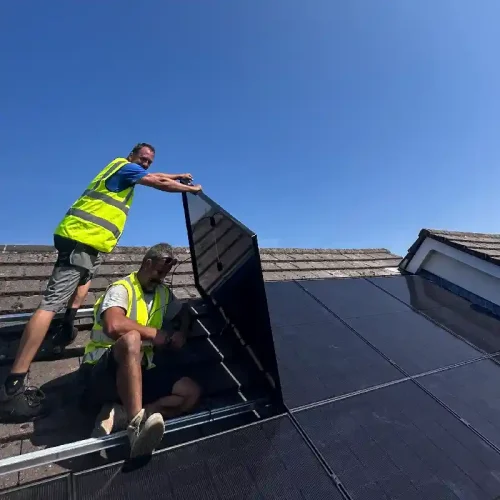
We use premium materials, built to last, fitted with care and expertise by our experienced solar installation team.
Discover the solar and battery services we offer to homeowners and businesses across North Devon.
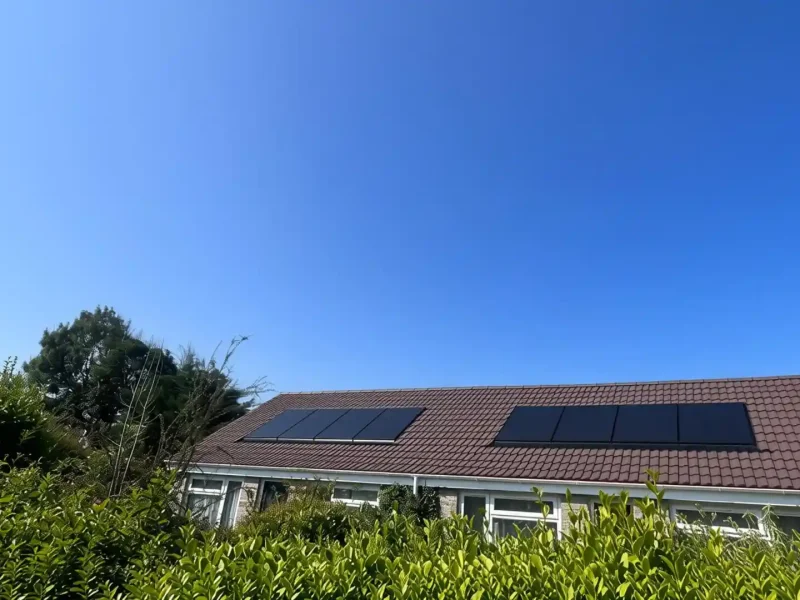
See our Solar Installation process for north Devon homeowners. Affordable, high-quality, expertly fitted.
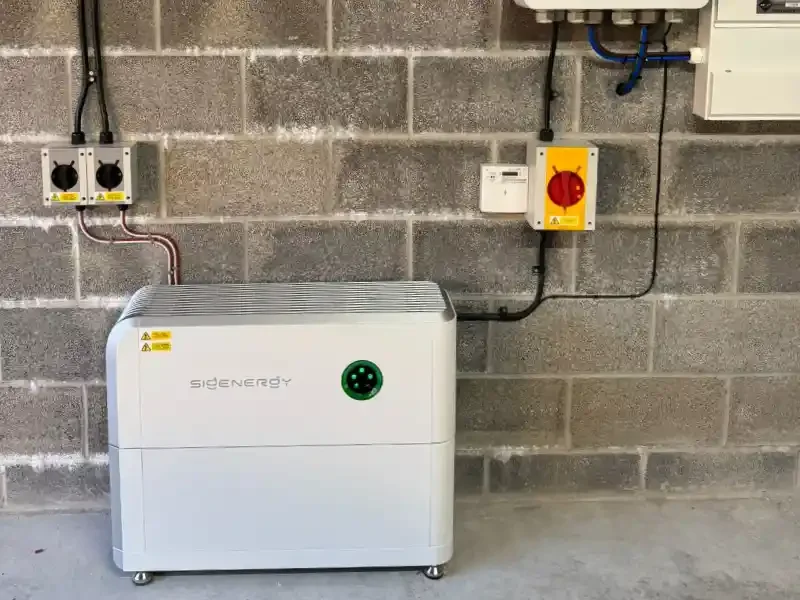
Add battery storage to your solar install to store energy, save money and reduce reliance on mains electricity.
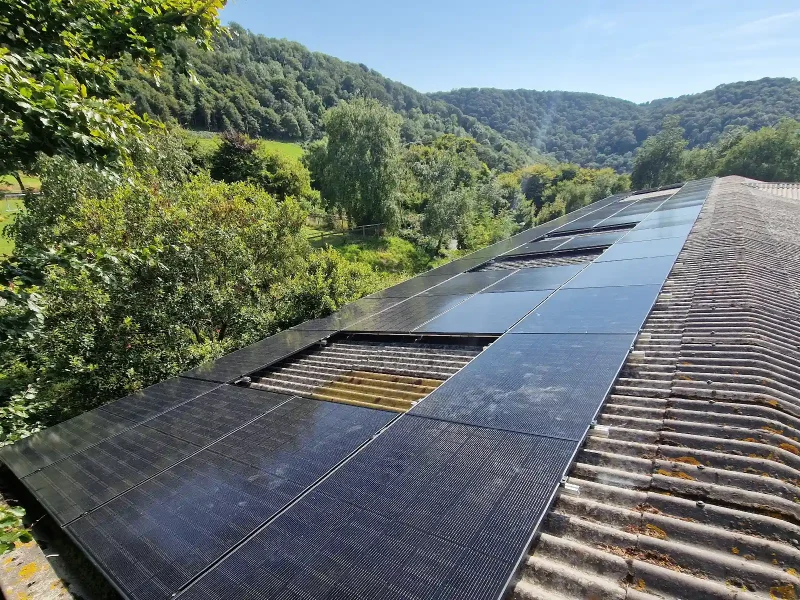
Money-saving solutions for Farmers and Business owners. Future-proof your operation, using space sensibly.
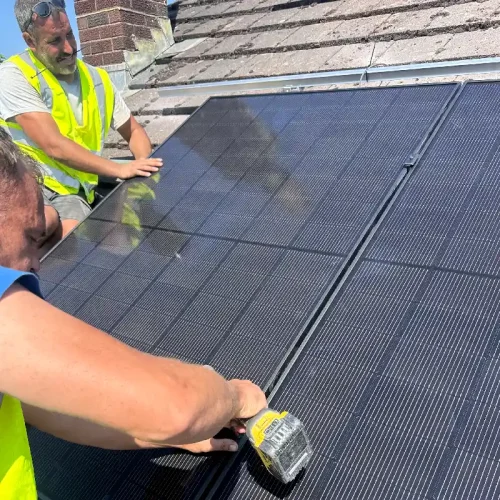
We believe strongly in using the best quality materials that stand the test of time - fitted expertly, with strong after-sales customer service.
MCS certification gives an insurance-backed guarantee plus a six-year system warranty. We are Trustmark, HIES, CTSI and Napit approved.

Use our Contact Form to tell us about your property and needs. We will follow up and provide a no-obligation quote for your consideration.
Our drone footage helps you see the fit and finish of the solar panels, plus operation of one type of battery and inverter
See our panels fitted across a recent North Devon new build site that prioritised eco-credentials and sustainable, carbon-conscious living.
These help the homeowners to store energy, save money and reduce their reliance on mains electricity from the national grid.
Take a look at some of recently-completed solar install projects across North Devon. We are proud of our team, their work and the happy customer testimonials we receive.


We go the extra mile to ensure you are delighted with your new solar energy solution. From small bungalows to vast farmlands, we value every customer.
James and the team did a great job, would highly recommend. Informative, great value and reviewed our circumstances thoroughly before offering a very personal and individually tailored set of proposals. In an industry that appears to offer a pretty one-sized approach this was extremely reassuring. Our solar system has now been in place for a few months and am really pleased with it.
Heddon Mill
We aim to always answer as clearly and transparently as possible, to help educate potential customers so they can make the best decision for them.
Solar panels convert sunlight into electricity through the photovoltaic effect, using photovoltaic cells made from silicon. The panels generate DC current that is converted into AC current that can be utilised in the house. The conversion is done by the inverter.
The cost of solar panels varies based on the size of the panel, the system size, the location, installation complexity, and additional features like battery storage. However, most domestic installations will vary from around £7k to £10k. That often includes a structural survey, labour, materials, scaffolding, warranties, and MCS sign-off.
Solar panels can significantly reduce energy bills and it is now considered as a proven technology. The tariffs are different to what they used to be but the system costs have generally lowered to make them more affordable. We may be biased but I have them on my home and I bet that anyone we have installed onto would agree.
Solar panels can still generate electricity from daylight, even on cloudy days, although efficiency may be lower. Therefore, you can expect higher production from around March to October than the winter months, but even the winter months will produce electricity.
A South-facing roof is considered the optimum orientation but East and West-facing roofs also perform very well. An East/West split will give you a more even production throughout the day given that half the array will get the morning sun, during the day both arrays will be working, and later into the evening the West-facing elevation will still be on. It may split your production slightly, but it is more evenly distributed from sunup to sundown.
Generally speaking they don’t – the glass is pretty good at self cleaning themselves when it rains. However, if you are in an area where birds like to use them as target practice, or maybe you have a dusty development going on nearby, then it may be a good idea to get these cleaned as and when necessary. The majority of people do not though.
While solar panels can provide a significant portion of a home’s energy needs, they don’t generally take a home fully off-grid. However, there are technologies now that can include a gateway so that when the grid goes down, we can keep certain circuits operational. It is also important to try and capture and use everything you generate. This can be done through the addition of a battery.
Battery storage for solar installations is an energy storage system that captures surplus electricity generated by solar panels during daylight hours so it can be stored and used later at night, on cloudy days, or during power outages.
The benefits of solar battery storage systems could outweigh the initial financial outlay because you can:
No. Unless you have a battery to store the energy, the electricity cannot be stored.
Lithium ion batteries tend to have a longer service life of around 10 – 15 years. Lead acid batteries have a lifespan of approximately 5 – 8 years.
The battery type you need will depend on your current set-up. Our experts can explain all the options and recommend the best system to suit both your needs and budget.
There are a few different options available, including lead acid and lithium batteries. Lithium ion batteries offer a longer lifespan and better overall performance and durability, but other cheaper batteries may be more suitable for your specific requirements.
Other things to consider include how much energy the battery will store in kWh, and the depth of discharge (DOD). Depth of discharge is related to how much energy you can use before recharging the battery. If you exceed the DOD limit before you recharge the battery, you can inadvertently shorten the lifespan of the unit.
We understand that battery storage is a significant investment and we will explain the pros and cons of each type in detail to ensure you can make an informed choice.
Generally not, but there’s potentially a way for this to happen in the future.
This is thanks to something called bidirectional charging, which lets an EV either draw or supply power to your home or the grid. This is currently being trialled in some places but isn’t widely available.
No. And we will always install a hybrid inverter so you could always add one at a later date. However, it is important to try and use everything you generate. This is best done by storing your electricity in a battery.
If you’re out at work all day then you’d simply be sending everything you generate back to the grid without a battery. You also only benefit from the 0-VAT-rated benefit from the initial purchase of a battery with your system.
But the simple answer is no, you don’t need a battery. If we are installing a relatively small array, and you are generally home a lot, then you will still massively benefit from having solar without a battery.
Whatever stage you are at, do feel free to send us a message and ask away. We will be happy to give you a straightforward reply that lets you know you have been heard and understood.
“I sent Earth Inspired my initial query and they responded very quickly with a fuss-free, no-pressure reply. That was followed by a no-obligation site visit and accurate estimate that I was happy to agree. Their service from start to finish was exemplary.”
Braunton